More and More Game Machine Players Are Switching to Crash Games, Here Is Why
The shift started quietly. Around 2020, a new category began appearing on online casinos—”crash games” or “instant games.” Three years later, these simple multiplier games command prime real estate on virtually every gambling platform, often positioned above slots that once dominated the homepage.
The numbers tell the story: crash games like Aviator reportedly generate over 10 million rounds daily across all operators. BC.Game, one of the largest crypto casinos, reports that crash games now account for nearly 40% of their gaming volume. Traditional operators are scrambling to add them, with Evolution Gaming, Pragmatic Play, and other major providers rushing crash variants to market.
But why are players abandoning the elaborate worlds of video slots for what amounts to watching a line go up until it doesn’t?
The Mechanical Revolution
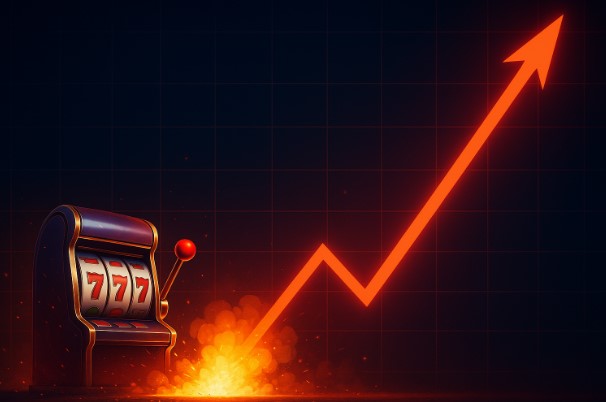
Crash games strip gambling to its mathematical essence. A multiplier starts at 1x and increases until it “crashes” at a randomly determined point. Players must cash out before the crash or lose their bet. That’s it. No paylines, no bonus rounds, no scatter symbols—just a rising number and a decision.
This simplicity is deceptive. While a slot spin is entirely passive (press button, watch result), crash games demand constant engagement. Every moment the multiplier climbs, you’re making an active choice: hold or cash out. The game transforms gambling from consumption to participation.
The speed difference is striking. A typical slot session might deliver 20-30 decision points per hour (bonus round choices, gamble features). A crash game session delivers hundreds—every second is a decision. This constant engagement triggers different neurological patterns than the intermittent reinforcement of slots.
The Transparency Factor
Modern video slots are black boxes. The RTP might be listed as 96%, but good luck understanding how that number emerges from the chaos of expanding wilds, multiplier reels, and bonus wheels. The math is deliberately obscured behind spectacle.
Crash games put their mechanics on display. The multiplier is the game. Many platforms even show the cryptographic hash that determines the crash point before you bet, allowing technically inclined players to verify fairness themselves. You can see other players’ bets and cashouts in real-time. The house edge is obvious and calculable.
This transparency particularly appeals to younger players raised on games where data mining, wikis, and optimization guides are standard. They expect to understand the systems they’re playing. Slots feel antiquated by comparison—trust-based gambling in a verify-everything era.
The Social Spectacle
Open any crash game and you’ll find something slots never achieved: genuine social gambling. A live feed shows every bet, every cashout, every crash in real-time. When someone rides a 100x multiplier to completion, the chat explodes. When someone crashes at 1.01x, collective groans fill the feed.
This social element isn’t decorative—it’s central to the experience. Players develop shared mythologies about patterns, celebrate each other’s wins, and commiserate over near-misses. The platforms listed on https://casinowhizz.com/online-casinos/ that offer crash games report significantly higher chat engagement than their slots sections.
Streaming has amplified this effect. Crash games are perfect for Twitch and YouTube—visually simple enough to follow on a small screen, with clear moments of tension and release. Watching someone sweat over whether to cash out at 50x is inherently more engaging than watching automated slot spins.
The Economics of Efficiency
From an operator perspective, crash games are a dream. No complex graphics to render, no sound design to perfect, no licensing fees for branded content. A crash game can run on a calculator. The reduced overhead should translate to massive profits.
Yet crash games typically offer better odds than slots. House edges of 1-3% are standard, compared to 4-8% for video slots. The reason is competition—players can easily compare crash games across platforms since they’re essentially identical. This commoditization forces operators to compete on house edge rather than features.
Players have noticed. The crash game community obsessively compares RTPs across platforms, shares strategies for maximizing expected value, and quickly abandons sites that increase their house edge. It’s a more sophisticated, less loyal player base than slot enthusiasts who might play the same game for years.
The Skill Mirage
Every mathematician will confirm that crash games are pure chance. The crash point is predetermined—your decision when to cash out doesn’t affect when it crashes. It’s essentially a slot machine where you choose your own payout table.
But that choice matters psychologically. Players develop complex strategies around auto-cashout settings, martingale progressions, and bankroll management. They analyze patterns that don’t exist, develop systems that don’t work, and convince themselves they’re getting better at something that has no skill component.
This illusion of control is powerful. Slots make you feel helpless—you press a button and accept your fate. Crash games make you feel responsible—you chose to cash out at 2x instead of waiting for 3x. That agency, even if meaningless, transforms the emotional experience of gambling.
The Generational Divide
The crash game phenomenon maps cleanly onto generational lines. Players under 30 overwhelmingly prefer them. Players over 50 barely know they exist. The 30-50 demographic is split, often playing both.
This isn’t just about technological comfort. Crash games mirror the financial instruments younger generations know: cryptocurrency charts, meme stocks, NFT launches. The aesthetic of watching a number go up (or crash) is familiar from checking portfolio apps, tracking Bitcoin, or watching GameStop implode. It’s gambling that looks like investing, which looks like gambling.
Traditional slots, with their treasure chests and leprechauns, feel increasingly disconnected from how younger players conceptualize money and risk. Why pretend you’re searching for gold when you could watch a multiplier that literally represents your money growing?
The Hybrid Future
The industry isn’t watching passively. New slots incorporate crash-style mechanics—multipliers that build during bonus rounds, decision points about when to collect winnings, real-time leaderboards. Simultaneously, crash games are adding slot-like features—themes, achievements, progressive jackpots.
This convergence suggests neither format will completely dominate. Instead, we’re seeing the emergence of hybrid games that combine slot presentation with crash mechanics, or crash games wrapped in slot-like progression systems.
Evolution Gaming’s “Crazy Time” points toward this future—a game show format that includes both slot-style wheels and crash-style multiplier rounds. It’s become one of the most popular live casino games globally, suggesting players want both experiences integrated.
The Retention Problem
For all their growth, crash games have a critical weakness: player retention. The average crash game player cycles through platforms rapidly, chasing better bonuses and lower house edges. There’s no attachment to specific games since they’re functionally identical across operators.
Slots, despite their declining popularity among younger players, still generate stronger loyalty. A player might have “their” slot—the one they always return to, where they hit their biggest win, where they know every bonus feature. Crash games haven’t achieved this stickiness.
This retention issue is forcing innovation. Some platforms now offer leveling systems, achievements, and cosmetic unlocks for crash games. Others are experimenting with narrative elements or themed events. The challenge is adding depth without sacrificing the simplicity that makes crash games appealing.
The Inevitable Reckoning
The rise of crash games represents more than a trend—it’s a fundamental shift in what players expect from gambling. Transparency over obscurity. Participation over passivity. Social over solitary. Mathematical clarity over thematic confusion.
Traditional slots won’t disappear, but their dominance is ending. The future belongs to games that acknowledge what crash games have proven: modern gamblers want to feel like active participants in their losses, not passive victims of them. They want to see the math, share the experience, and maintain the illusion—however thin—that their choices matter.
The slot machine, that perfect skinner box refined over a century, has finally met its match: a line that goes up until it doesn’t. It’s almost insultingly simple. That’s precisely why it’s winning.
What is your reaction?


You may also like

Distributors Move Fast—Your Sales App Should Keep Pace or Get Out of the Way


Mercy Home Services: Understanding the IHSS Program in Colorado

Why dive bomb industries Offers the Best Headlamp for Every Hunter